
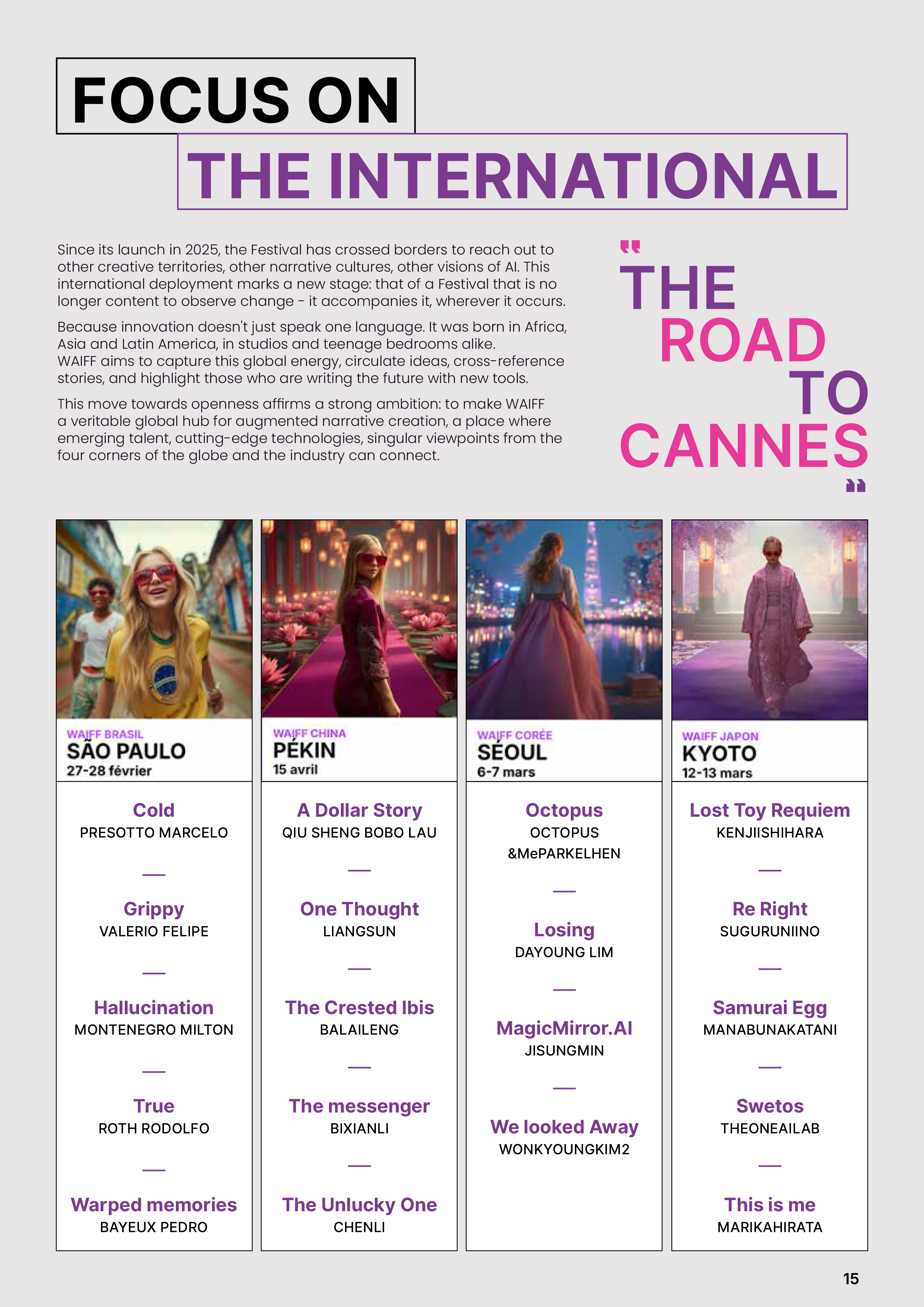
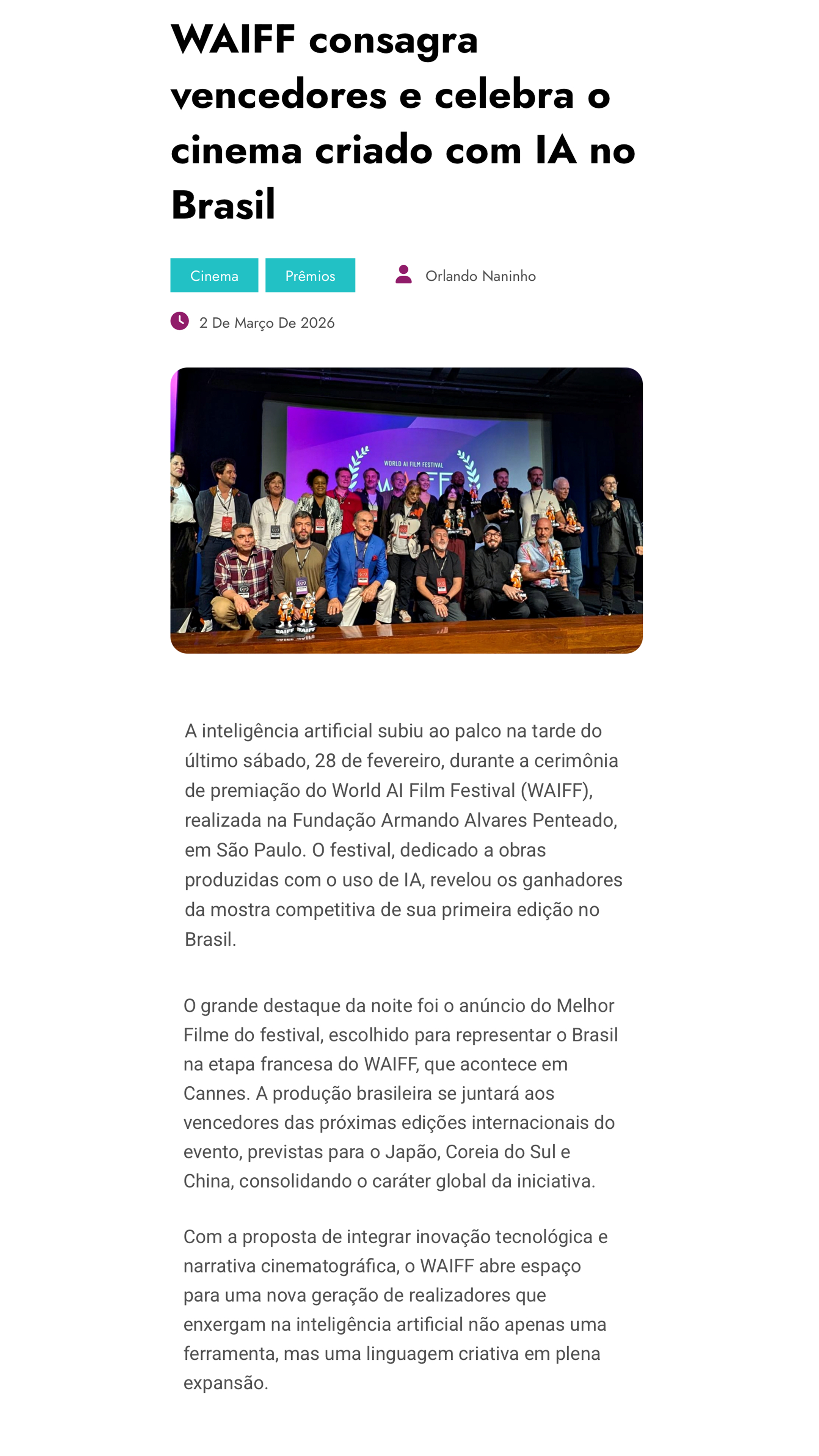
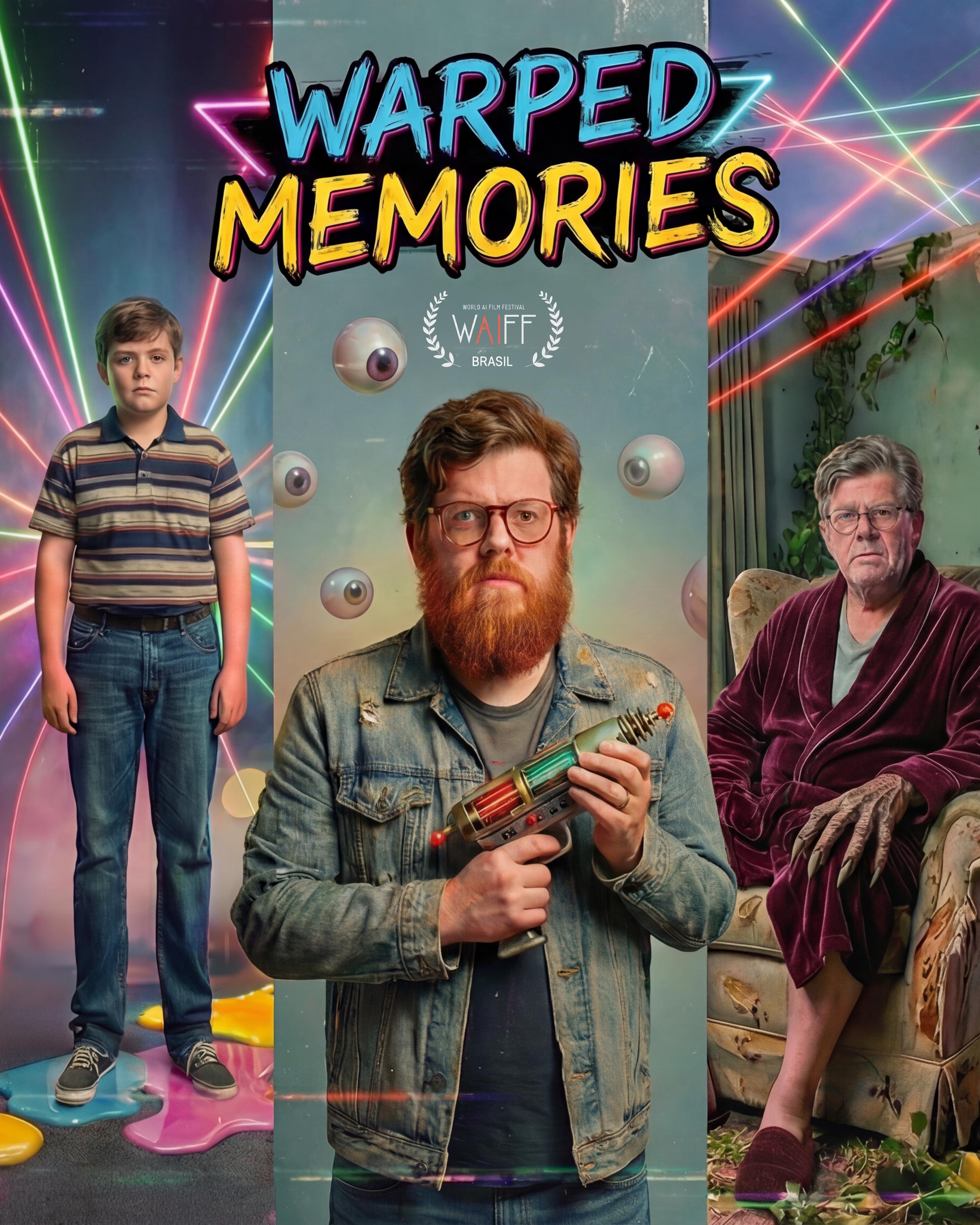
Warped Memories, 2026, 8’15’’
In the rush to consume the future, we have forgotten that memory was never meant to be efficient. It was meant to be ours.
In a fictional São Paulo, this film traces a thirty-year migration from the heavy matter of the 90s to the hallucinations of latent space.
As architecture melts into data-streams, a ghostly narrator asks: What happens to the human story when the machine begins to dream in our place?
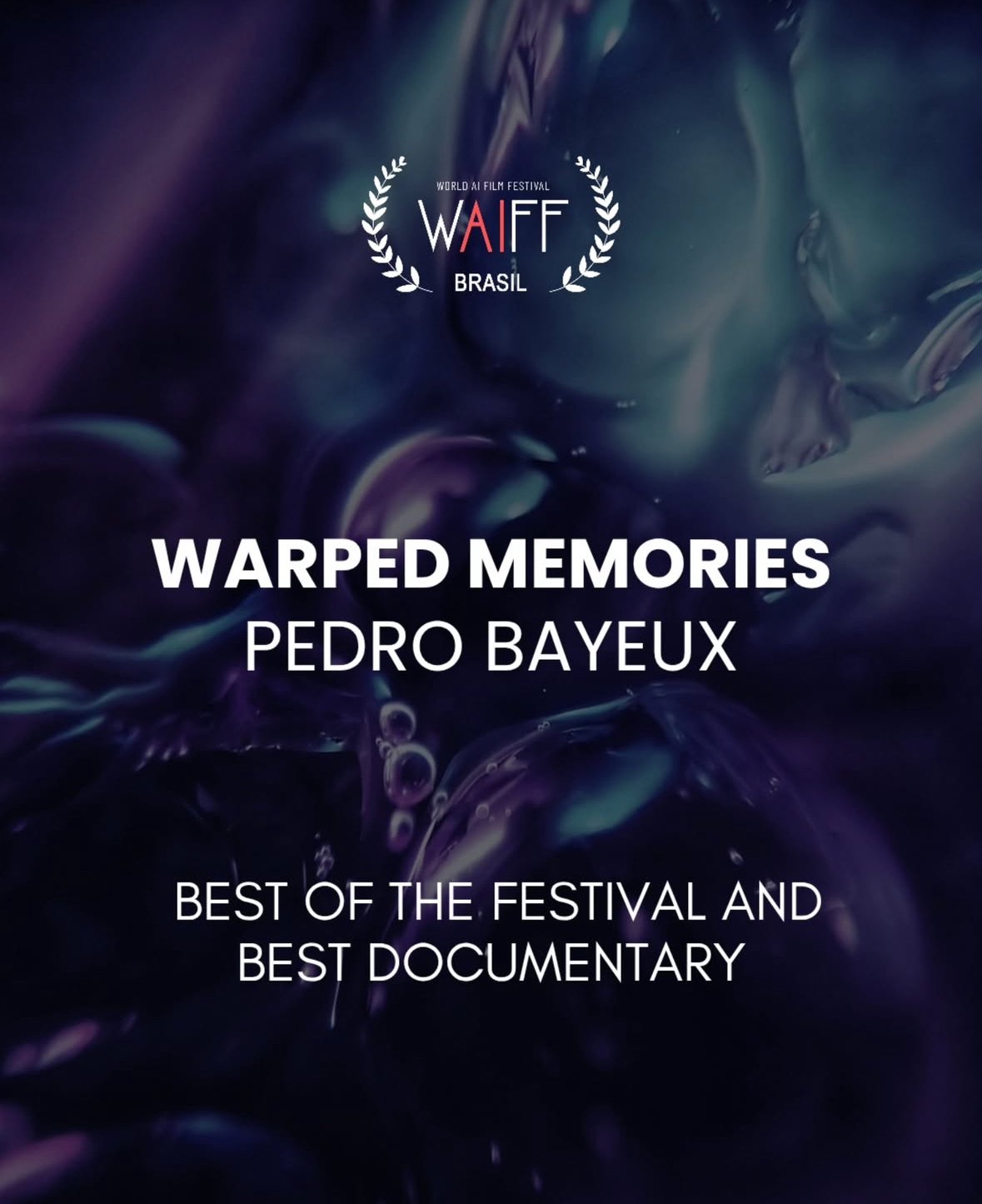
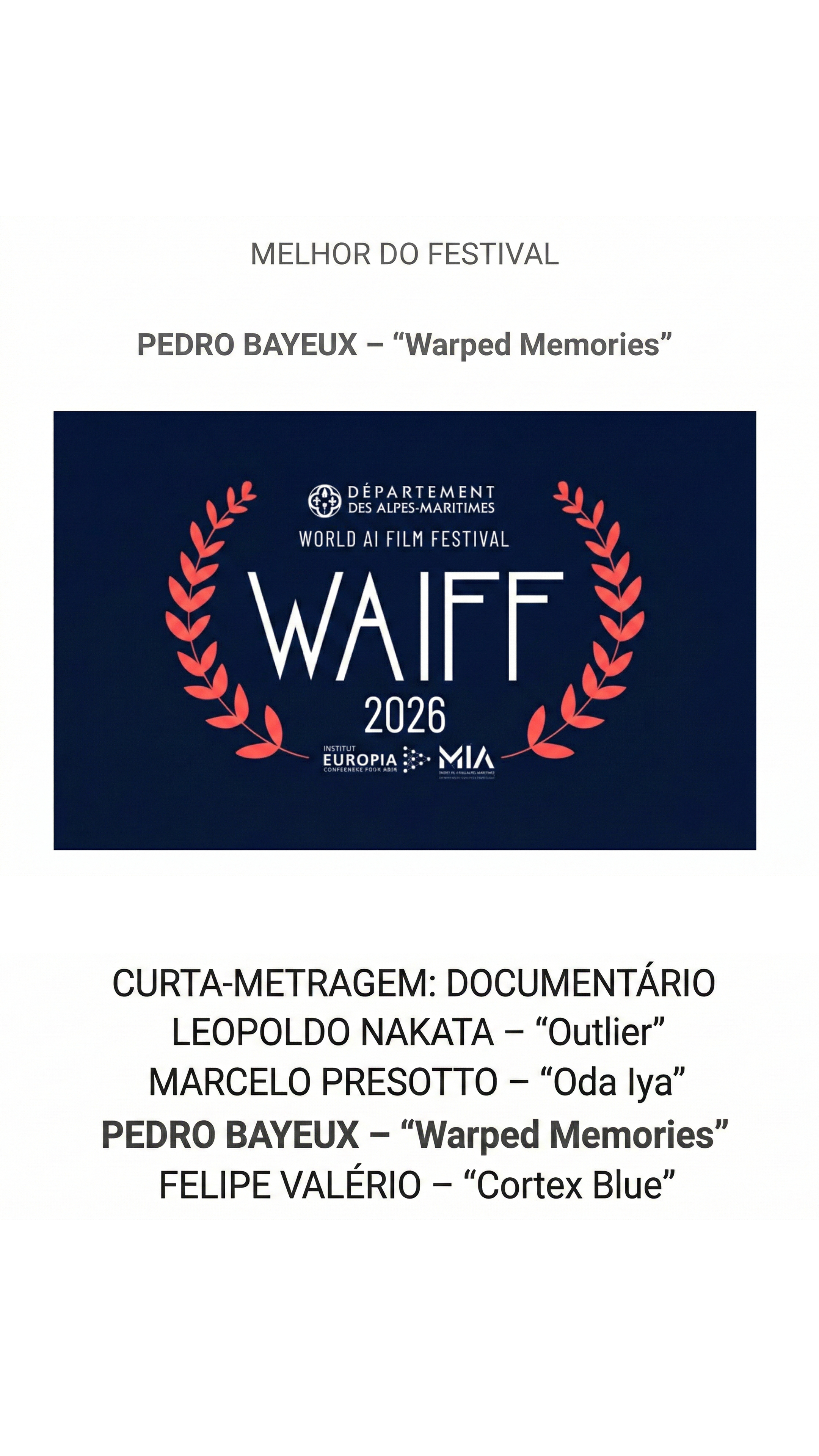
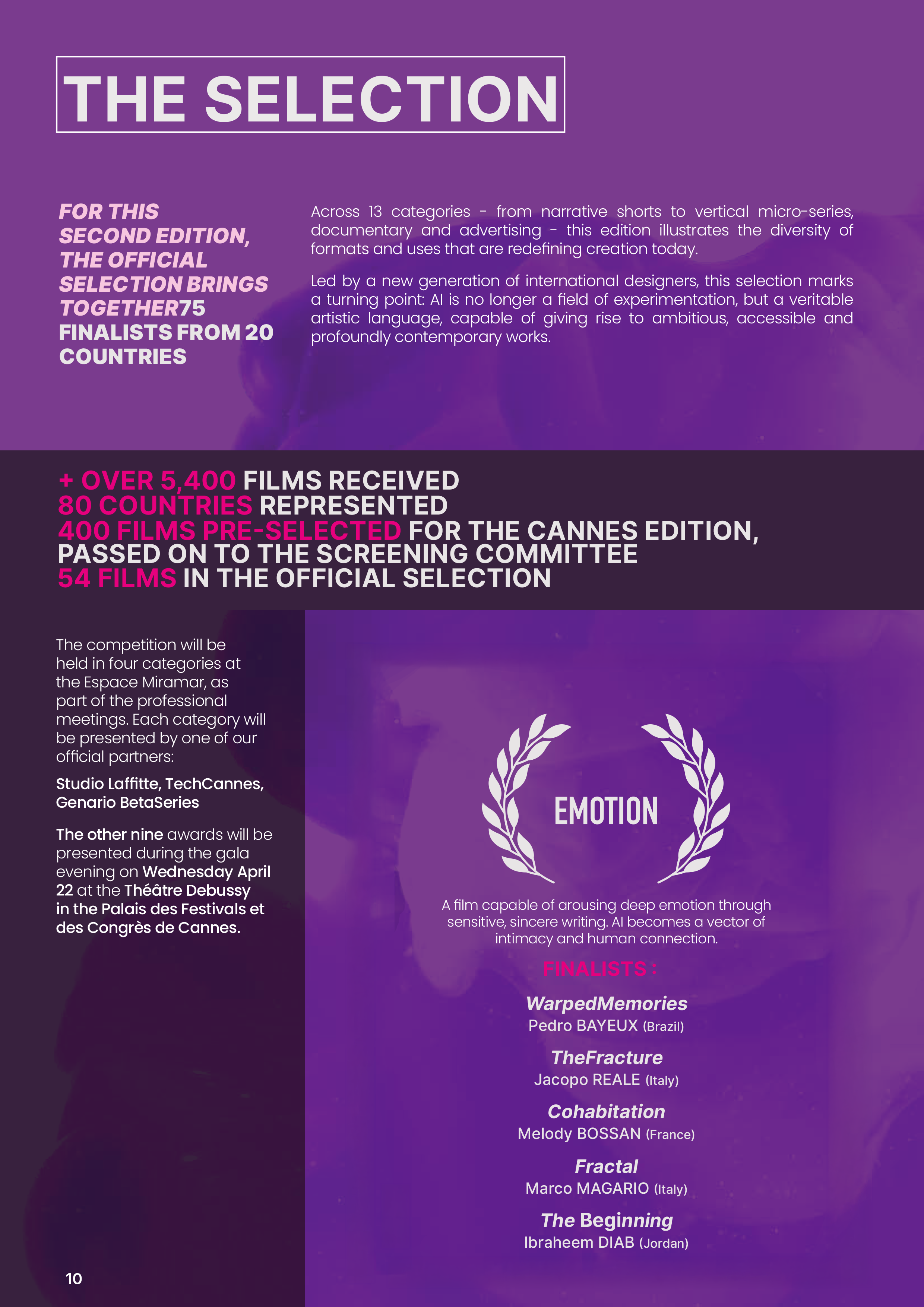
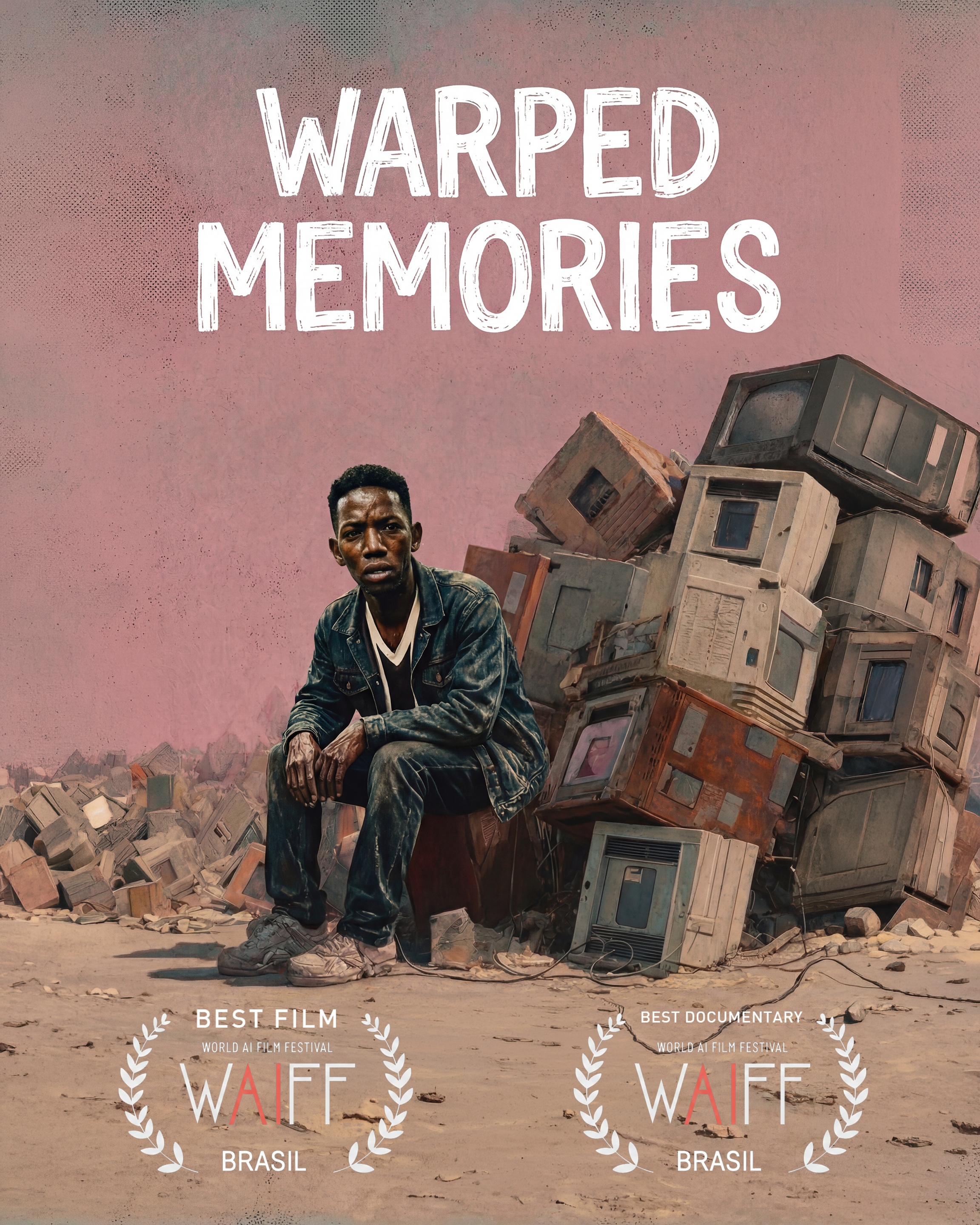
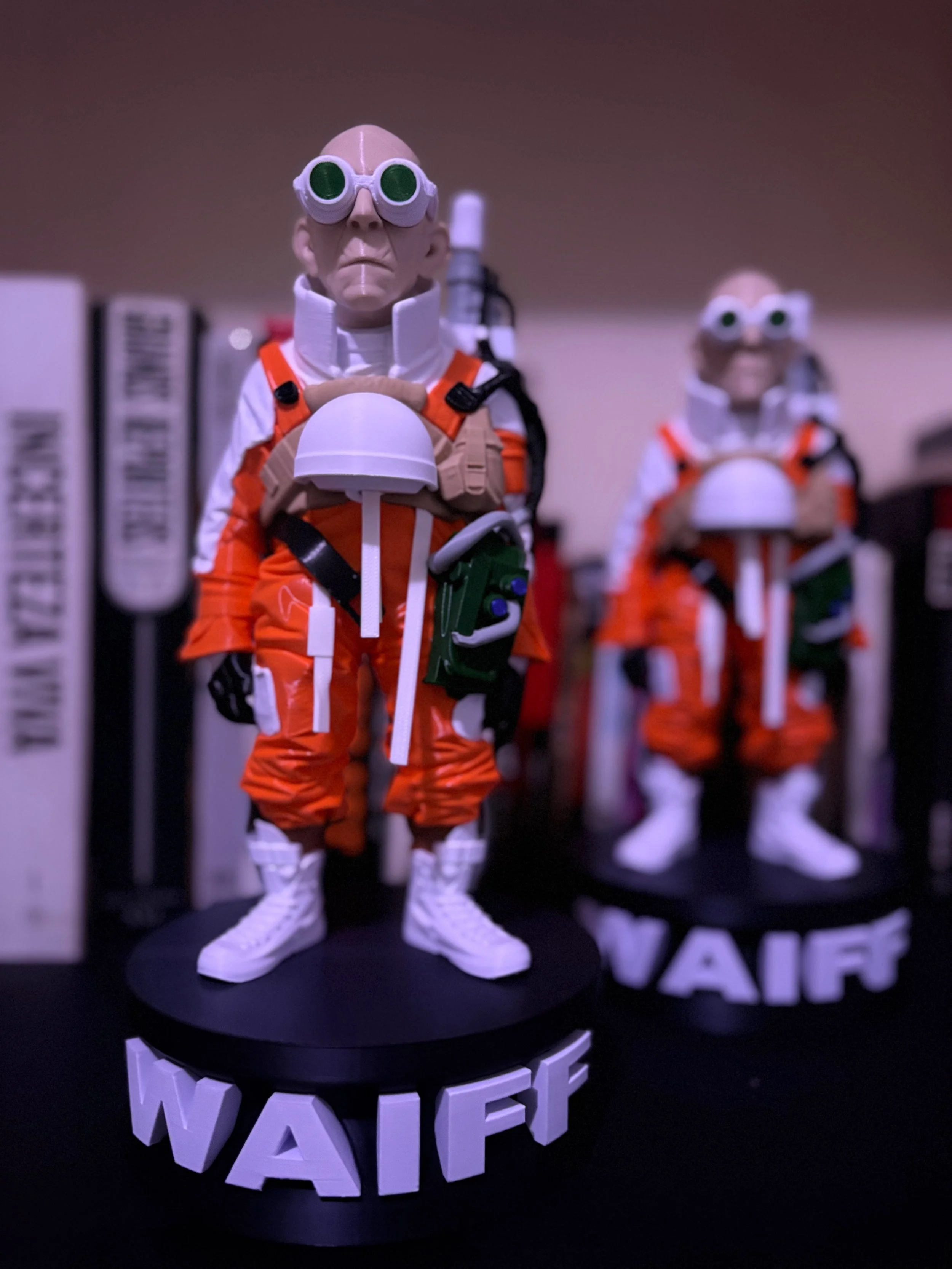
WAIFF Brazil - Best of The Festival and Best Documentary
WAIFF Cannes - Finalist
Direction and Creation
Pedro Bayeux
1. Image Generation: Midjourney, Nano Banana, Photoshop
2. Video Generation: Kling, Veo 3
3. Audio and Voice: Suno, ElevenLabs, Auphonic
4. Editing: Premiere Pro
5. Assistant: Gemini
Bibliography:
Yuk Hui (Cosmotechnics, Art and Cosmotechnics, On the Existence of Digital Objects)
Henri Bergson (Matter and Memory)
Byung-Chul Han (The Expulsion of the Other)
Mark Coeckelbergh (AI Ethics)
Kate Crawford's (Atlas of AI: Power, Politics, and the Planetary Costs of Artificial Intelligence)
Joanna Zylinska's (AI Art: Machine Visions and Warped Dreams)
Warped Memories
1990s
What is memory?
For some, it is an archive. For others, a ghost. But for those at the edge of the digital revolution, memory is a shifting landscape—a territory that was once made of stone and paper, now dissolving into light and logic.
The inverted cone
In 1994, to be eighteen in São Paulo was to be anchored in matter. If you wanted to remember a face, you carried a slip of paper. If you wanted to hear a voice, you waited by a corded phone. Memory was a physical burden, heavy and singular.
The philosopher Henri Bergson created a term called "Inverted Cone." The tip is "Now." It is the people in the streets of São Paulo, touching the pavement. But the base of the cone? That is the past. To Bergson, the past doesn't disappear; it stays with you, whole and entire, pressing down on the present. Memory isn't a recording; it is the soul’s duration.
From Spirit to Matter
Albert Einstein looked at the stars and saw a clock. He told Bergson that the "time of the philosopher" was an illusion.
In the lab, the soul was replaced by the synapse. Memory became a chemical trace—proteins folding in the dark of the skull. The ghost was being turned into a machine.
As the focus shifted from space to time, memory began to be understood as a living force—a "duration" that colors the present.
The Block Universe (Spacetime)
The universe moves from order to disorder, from low entropy to high entropy. Memory is only possible because the past had lower entropy than the future.
For Bergson, the past is "behind" us and the future does not yet exist. But according to Relativity, the distinction between past, present, and future is only a stubborn illusion.
Memory isn't a "spirit" staying alive; it is a physical scar left by the increase of entropy. It is the "trace" left by the heat of life.
2000s
The Digital Limbo
Then came the great offloading. By their late twenties, the "Cone" began to shatter. We moved our lives onto floppy disks, Zip drives, and Mini-DV tapes. We thought we were saving everything. We thought we were immortalizing the moment.
But this is Limbo. The 2000s are a graveyard of dead formats. A decade of "File Not Found." The hardware died, the software vanished, and the keys to the palace were lost. For the first time in history, our external memory became more fragile than the neurons in our heads. The generation that has a hole in our history.
2010s
The Era of Liquid Data
By the 2010s, the "Archive" was no longer a place you visited. It became the air we breathed. We stopped "saving" things and started "syncing" them. The memory of these three friends was no longer a weight in their pockets or a disk in a drive - it was a ghost in the Cloud.
Memory became constant. The "Duration" that Bergson spoke of - the slow, painful seasoning of a life - was flattened into a scroll.Every "Like" was a data point; every memory was a transaction.
Monster of Memory
The relationship between media and memory fundamentally changed: a new monster of memory is born.
We traded the grainy uncertainty of the past for a sterile, backlit present that never allowed us to forget—or truly remember.
The 2010s were the decade of the Great Erasure through Abundance.
We had everything, so we remembered nothing.
The "Inverted Cone" didn’t just shatter; it liquefied.
We became consumers of our own reflections, trapped in a loop where the "Other" was expelled to make room for more data.
We were preparing ourselves to become the training sets for the machines that would soon begin to dream in our place.
2020s
The Warped Dream
The 2020s are marked by a convergence of huge computing power with the greatest memory dump in history.
We have reached the era of hallucination. We don't just store memories anymore; we feed them to a global appetite.
Artificial Intelligence doesn't "remember" the smell of the rain or the weight of a first heartbreak. It calculates. It takes the billions of fragments we didn't lose—the metadata of our lives—and dreams for us.
It produces "Warped Dreams." These are images of a past that looks like ours, but has no gravity. It is a statistical average of a life, an algorithmic echo where the faces of our youth are blended into a generic perfection. The "Cone" has been flipped; the past is no longer pressing on us from behind. It is being predicted for us, ahead of time.
Non-Things
The process has reached its logical conclusion. We have moved from "things" to "non-things." Information flashes in a fragmented "real-time" that destroys the stillness required for reflection.
When machines consume material made by other machines, what was once a more discernible human past becomes warped.
A memory trained and extracted from the archive of us.
So, what’s memory now? In the end, it’s not the spirit, the image on the screen or the file on the disc.
It’s the heat the machine gives off while it forgets you. It’s the energy wasted to maintain the illusion that you still exist. Memory is the friction of the world resisting the machine.
In the rush to consume the future,
We have forgotten that memory was never meant to be efficient.
It was meant to be ours.